

Fernando Paredano started keeping cider labels in the winter of 2001, just after the first cider labelling law had come into force: he peeled the first one off a bottle in a cider bar in Cimadevilla, in Gijón. Twenty-five years later his collection, La Sidra de Papel® ("Cider on Paper"), holds some 9,000 labels from 63 countries, as well as trade cards, price lists, invoices and letters going back to the late 19th century. Most of it is Asturian, but he keeps it sorted by province, and his albums include Basque cider: labels from Usurbil, Oiartzun and Berriatua, and a handful from ciders made for the Basques of the Americas.
The Basque labels
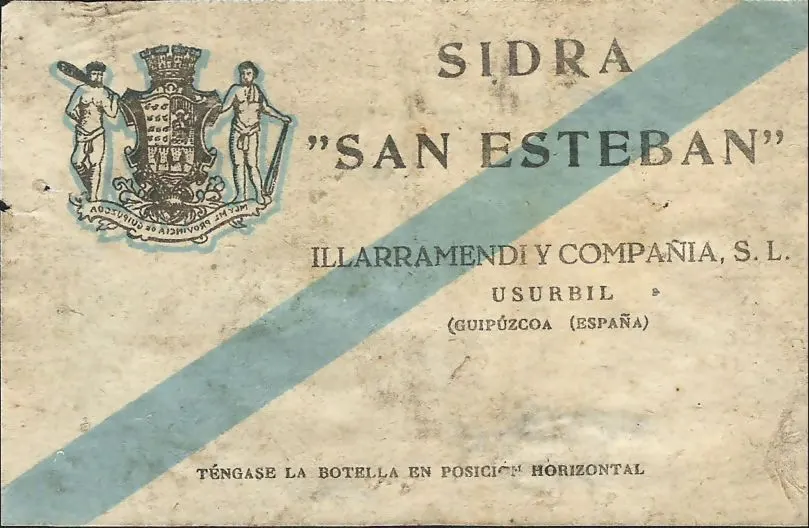
"San Esteban", from Usurbil
The label belongs to Illarramendi y Compañía, S. L., of Usurbil. It carries the coat of arms of Gipuzkoa and a piece of advice that recurs on labels of the period: "Keep the bottle lying horizontally". While we were talking on the phone, Paredano looked it up in his album and checked it with a magnifying glass to tell us something he had only noticed the day before, while photographing it for us: the coat of arms seems to be upside down. The same house had another, round label, which he knows exists but has never managed to find.
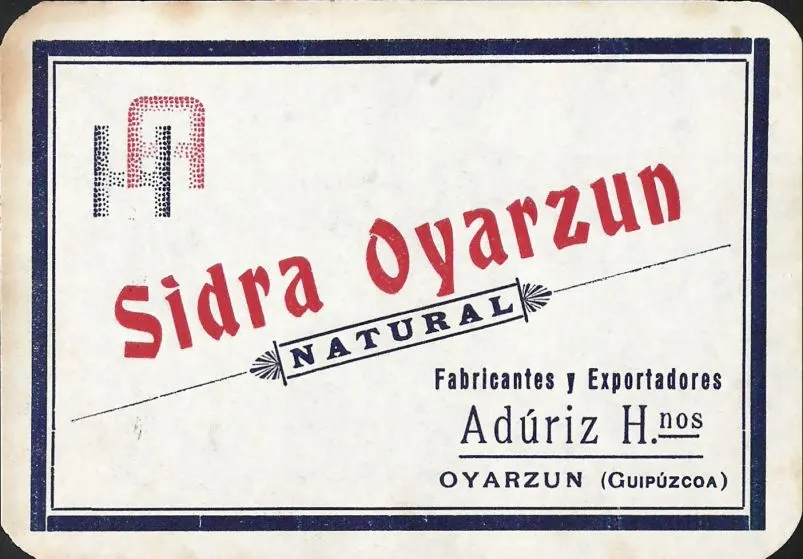
"Oyarzun", from Adúriz Hermanos
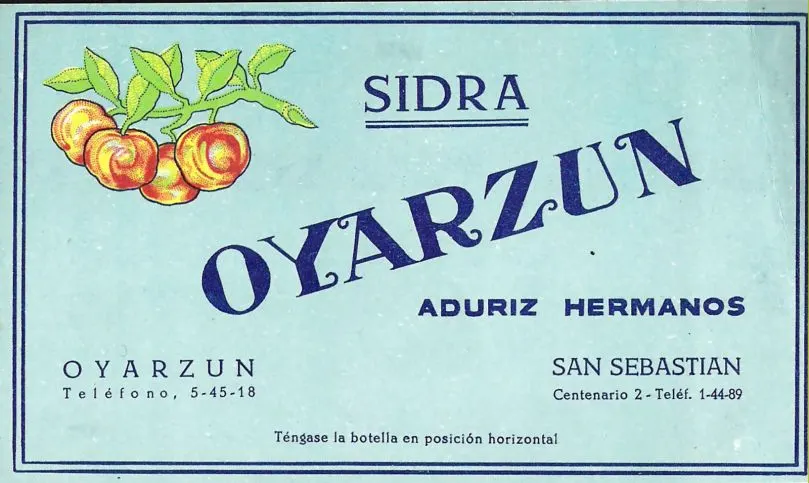
Adúriz Hermanos, of Oiartzun, described themselves on the label as "makers and exporters". He has six labels of their "Sidra Oyarzun", and some of them also give an address in San Sebastián, on Calle Centenario. The house, he says, no longer exists.
"Corona", from Berriatua
Sidra Champagne "Corona", from Madariaga-Guisasola of Berriatua (Bizkaia), is the rarity of the group: he has never found another label of it, or even a mention.
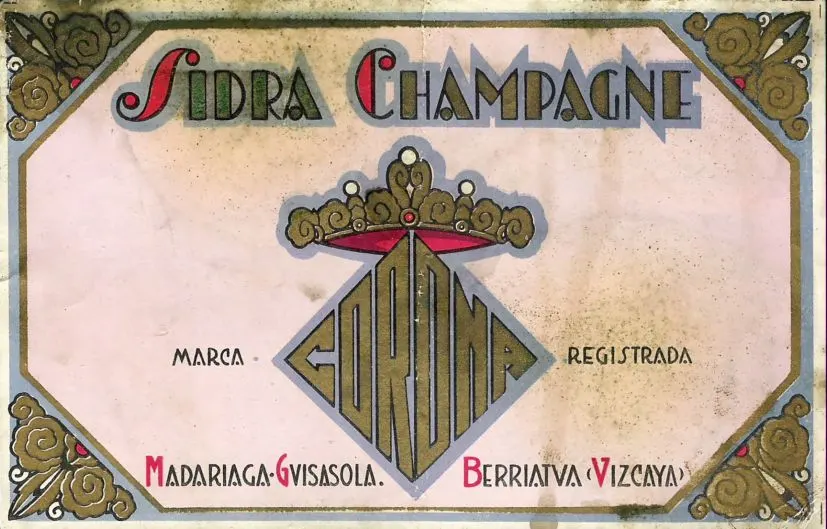
No date, no sender
Paredano has no date for any of the three. Nor does he remember for sure how they reached his collection: some old pieces came in lots from online auctions, but in his early years he used to write to the producers and send them a stamped return envelope, and having six from Oyarzun makes him think the house itself sent them.
Today Usurbil is still one of the cider villages of Gipuzkoa, with cider houses such as Aginaga, Aialde Berri, Arratzain, Iguarte, Saizar and Urdaira, and Oiartzun has Ordo-Zelai.
Basque or Asturian?
Two brands tell a curious story: ciders with names and mottos in Basque, made for the Basque community in the Americas, one from an Asturian house and the other bottled in Bilbao.
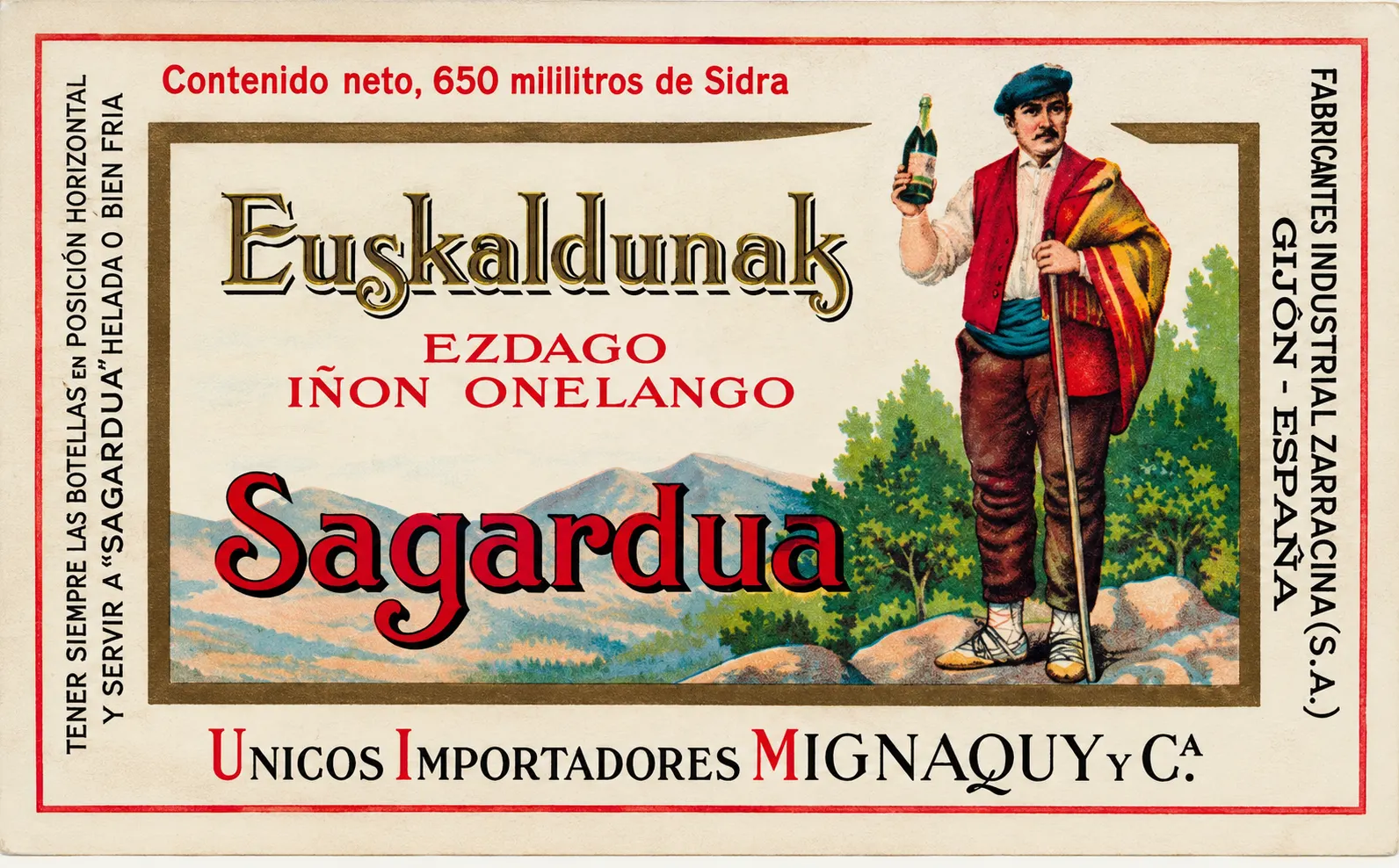
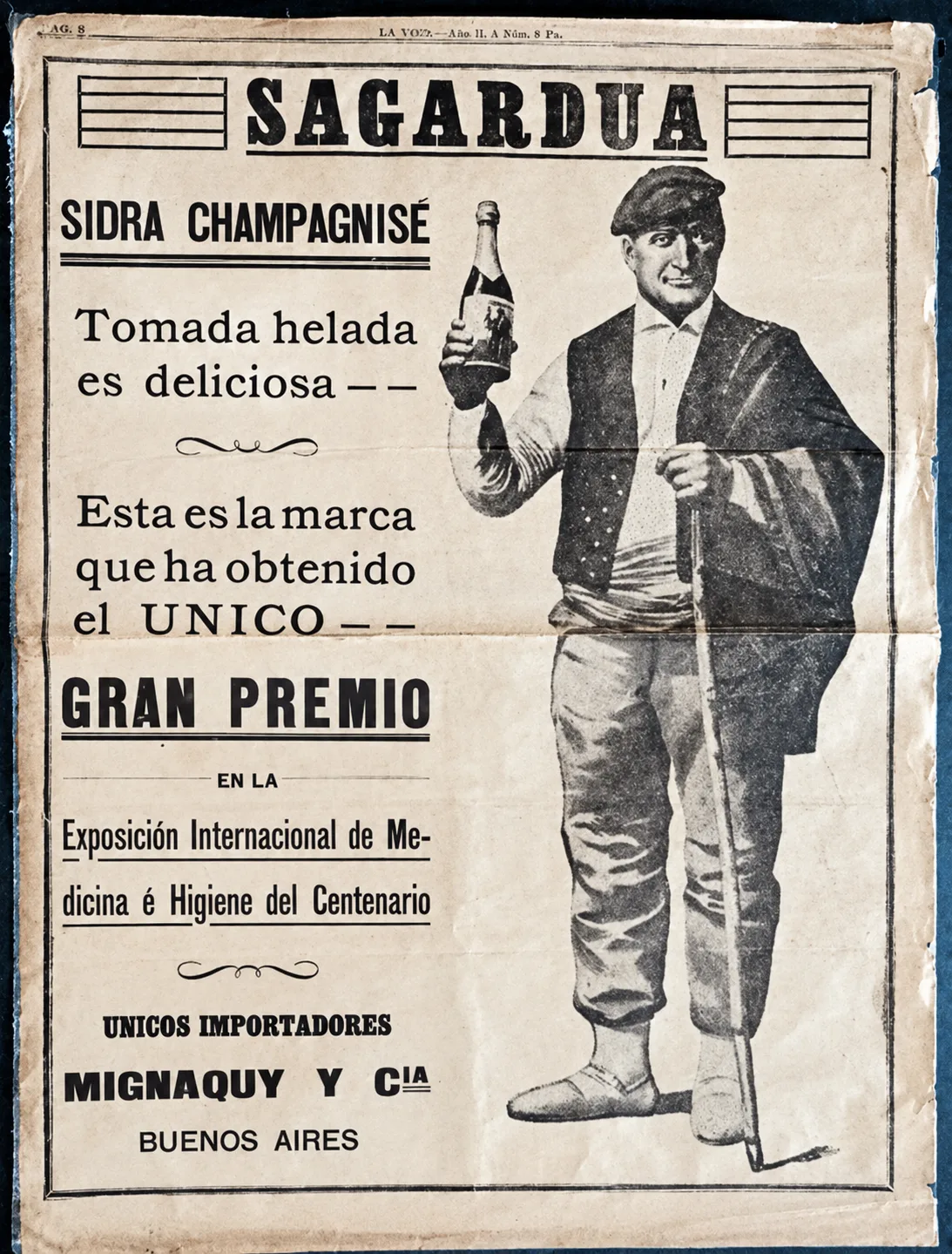
"Sagardua" was launched by Industrial Zarracina (Gijón) around 1900, and it is the label at the top of this article. It shows a man in a beret, sash and makila (the Basque walking stick), and says in Basque Euskaldunak ezdago iñon onelango Sagardua ("Basques, nowhere is there a cider like this one"). It also names its "sole importers", Mignaquy y Cía. According to Paredano, with it Zarracina got ahead of its competitors and won part of the Cuban and Argentine market.
From the same cider he has a poster that came from Argentina, a page of the newspaper La Voz. With the same man in beret and makila, now holding a bottle, it advertises "Sagardua" "Sidra Champagnisé" ("delicious served ice-cold") and boasts that it is the only brand to have won the Grand Prix at the International Exhibition of Medicine and Hygiene of the Centenary, in Buenos Aires. There is no mention of Asturias, of Spain or of the maker: only the importers, Mignaquy y Cía., of Buenos Aires. It was, Paredano says, an import house that held the exclusive rights to "Sagardua" and still exists, with its historic building in the La Boca neighbourhood.
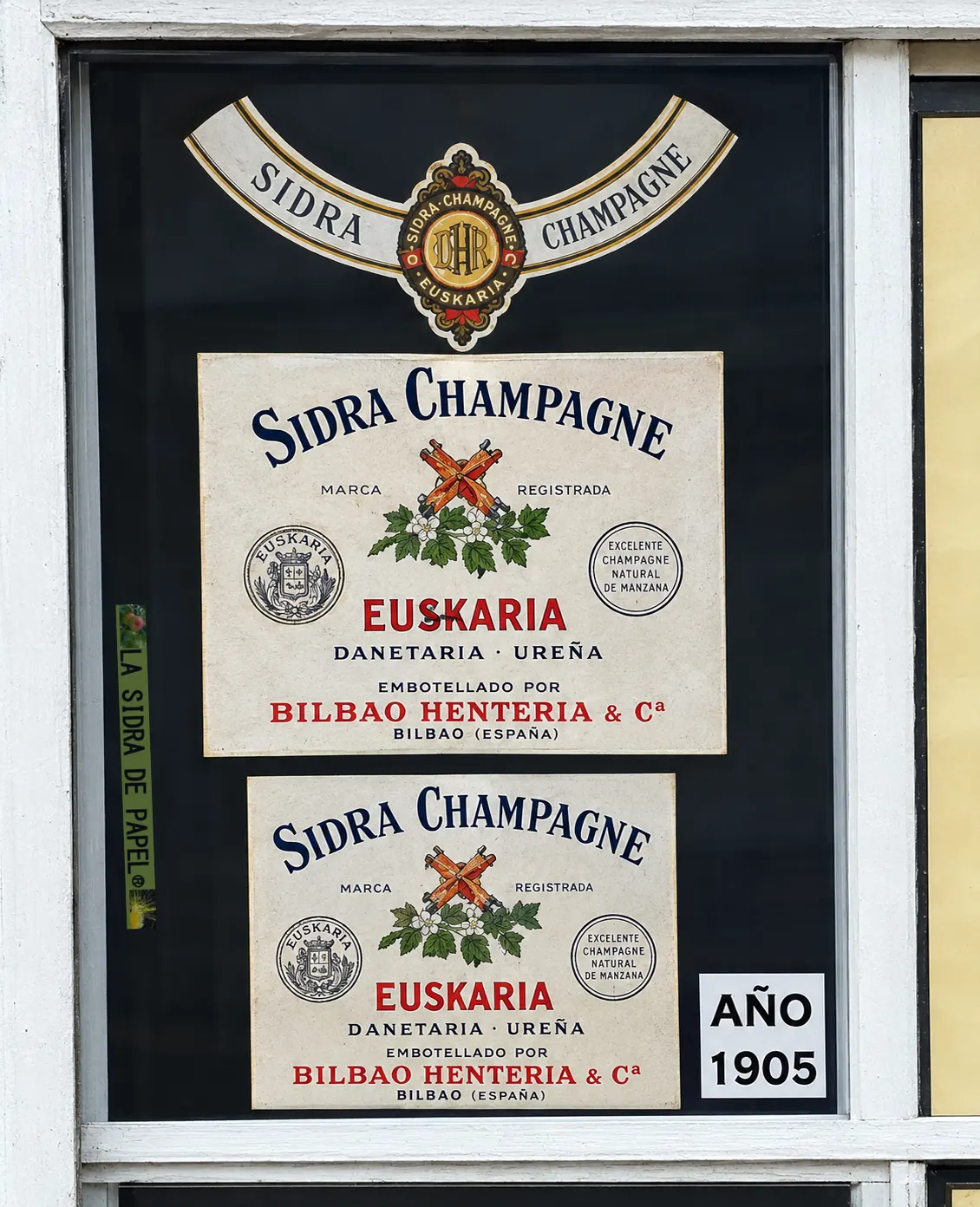
"Euskaria" is a Sidra Champagne from 1905, an "excellent natural apple champagne", and its label reads "Bottled by Bilbao Henteria & Cª, Bilbao (Spain)". The factory, as the label says, was in Bilbao.
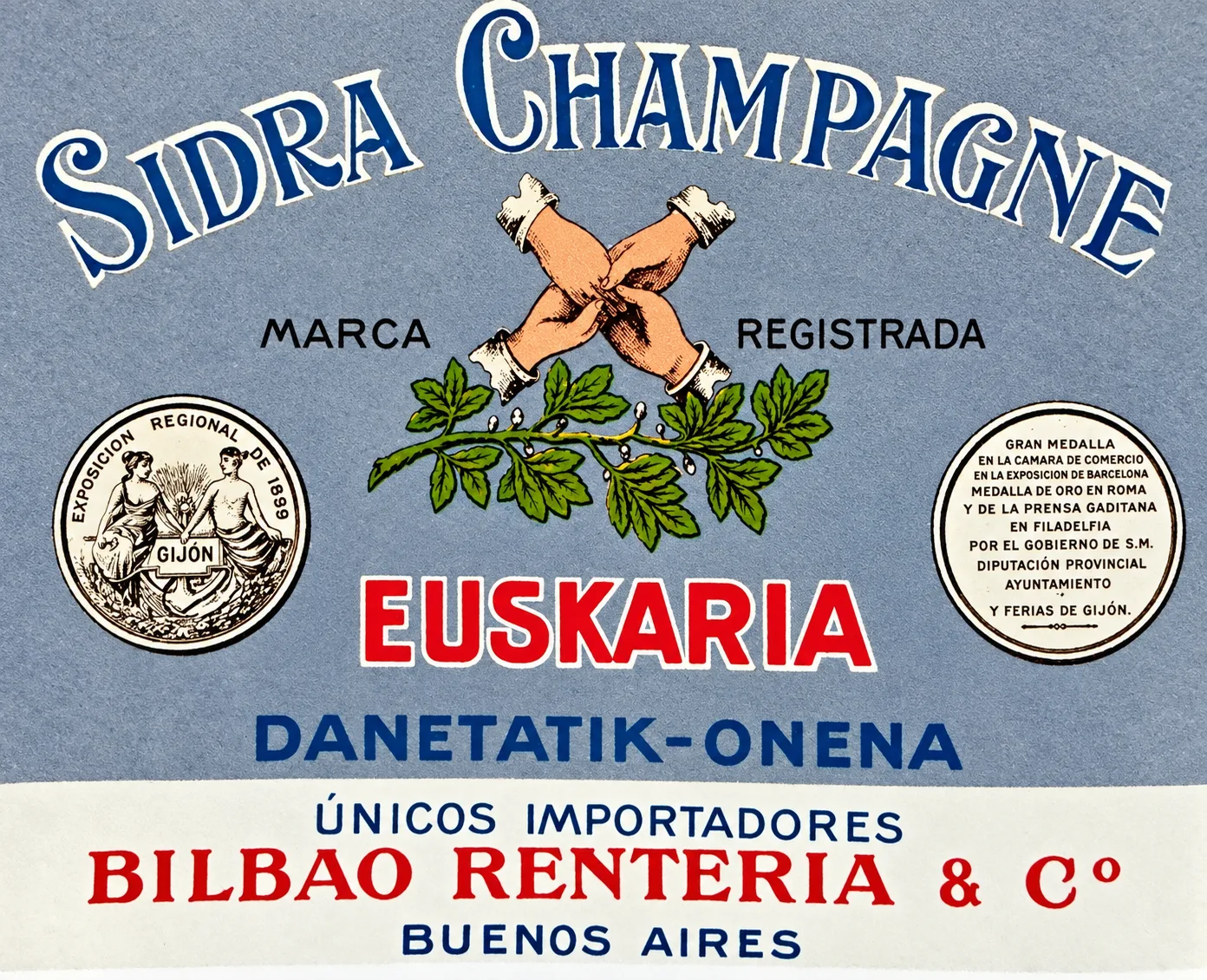
And, according to Paredano, the Bilbao firm were also the importers in Buenos Aires: another "Euskaria" label reads "sole importers Bilbao Renteria & Cº, Buenos Aires", with the Basque motto Danetatik onena ("the best of all"), next to the medals of the 1899 Regional Exhibition of Gijón and of the Gijón Fairs.
Nor were Basque names the business of a single house: Valle, Ballina y Fernández, the makers of El Gaitero, had other brands with Basque names, such as "El Pelotari" and "Jai-Alai".
How a collection grows
Paredano once ran a cider bar, "Salinas", in Luarca, and he started with what was closest to hand: Asturian cider. He asked the cider makers for their labels by letter and, if they didn't answer, went to get them. Then came Basque, Cantabrian and Navarrese cider, and later England and France. He also began writing to producers abroad, who answered him one by one.
One of the big leaps he owes to a beer label collector he corresponded with. One day his friend told him that a box of English cider labels was up for auction in London: for 20 pounds, postage included, he received the original box with some 170 labels in one go.
Today he has more than 4,000 from Asturias alone. One day he decided to count the German ones and got to 408.
In this kind of collecting every change counts: a label with a different strength, a different address or an added postcode is already a different piece. And labels never stop changing because, he says, the rules force producers to redo them every so often; the last time, to add the recycling symbol.
Besides paper, he keeps a section of curiosities: pens, propelling pencils and metal rotating calendars, antiques from the world of Asturian cider.
The Asturian gems
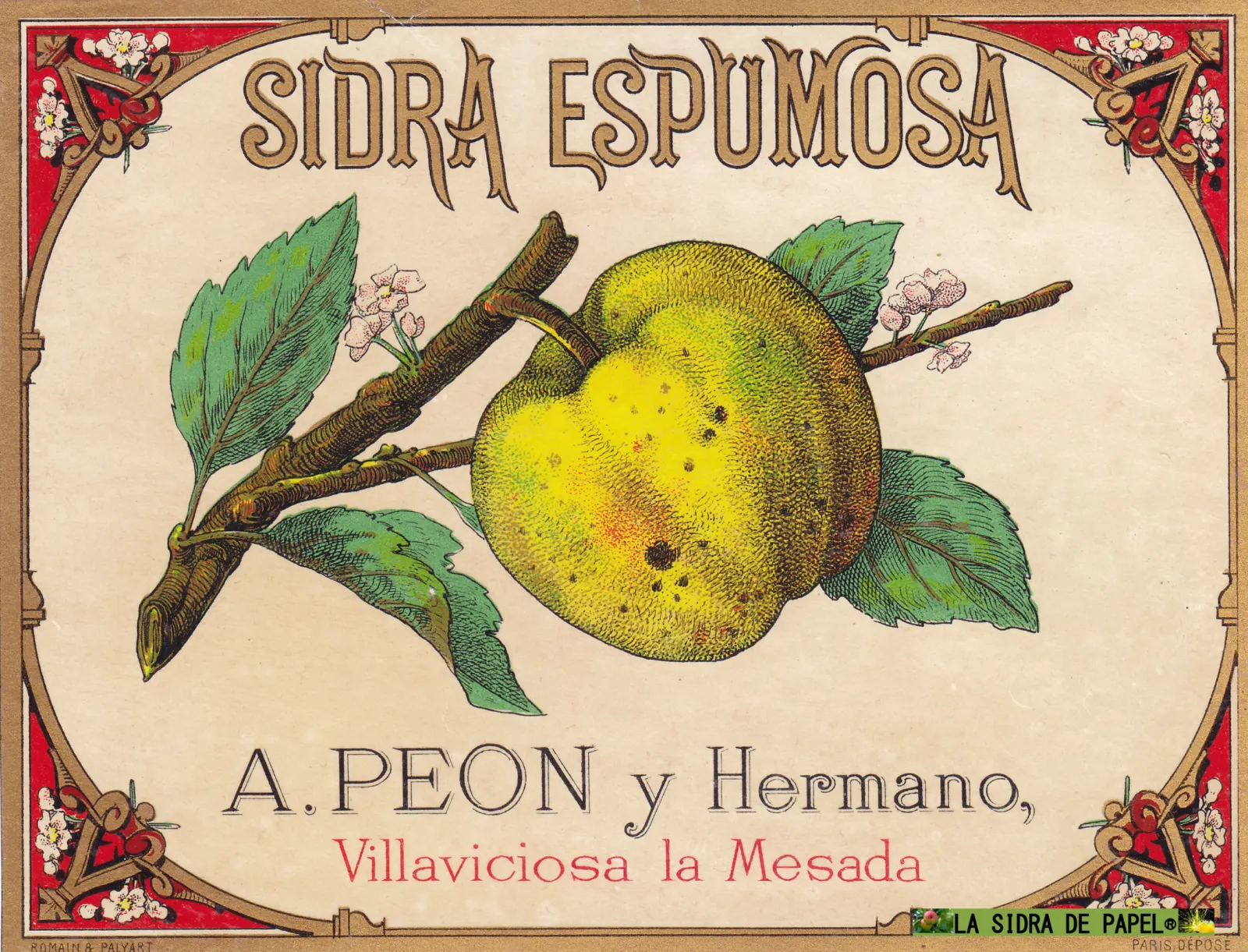
The most valuable part of the collection, according to its owner, is Asturian, starting with the label of "A. Peón y Hermano", from Villaviciosa, dated 1872: the oldest Asturian piece he has. It is for a sparkling cider, and the label was printed in Paris (Romain & Palyart).
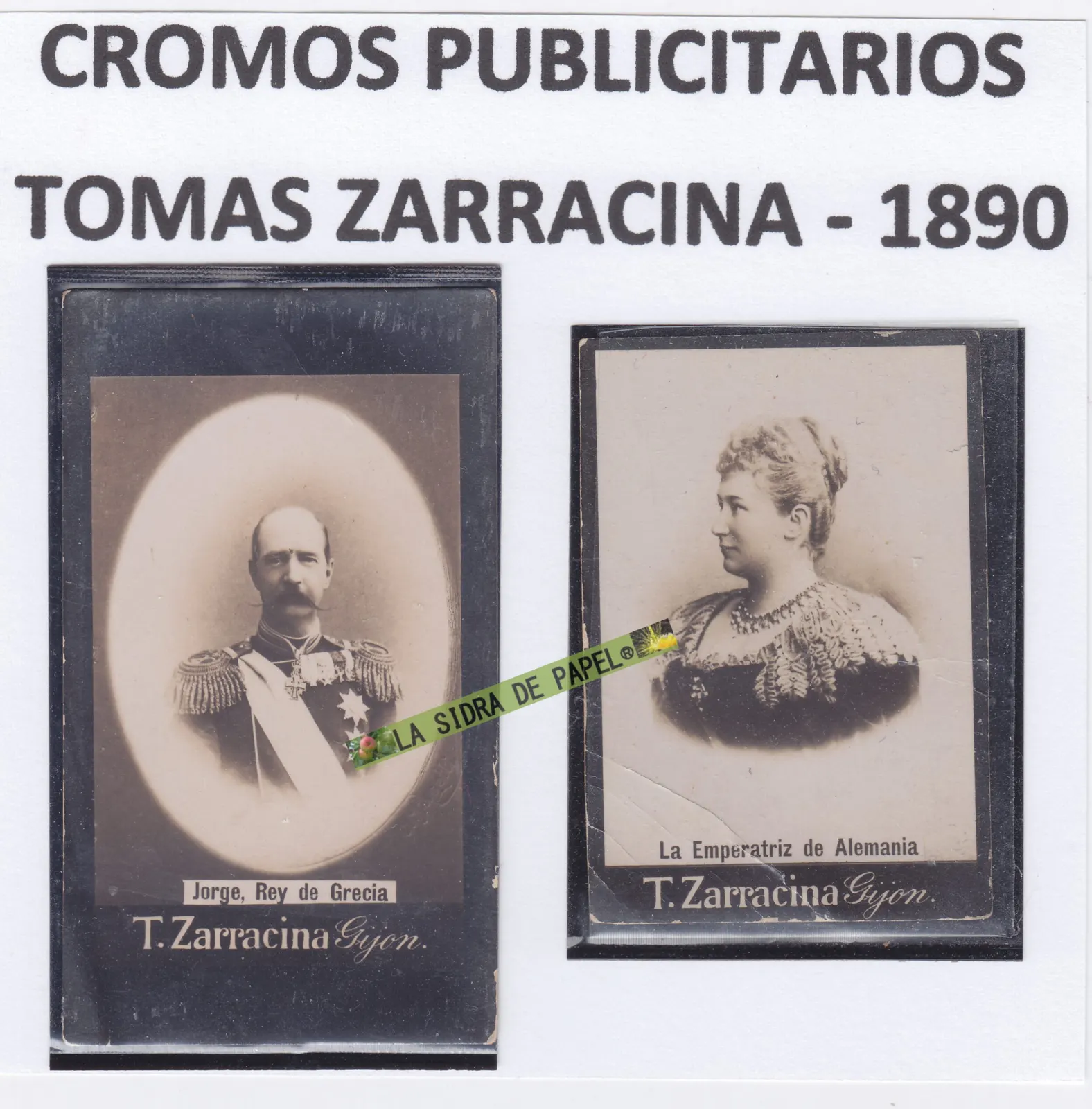
Next come the advertising trade cards of Tomás Zarracina (Gijón, 1890), with portraits of European royalty.
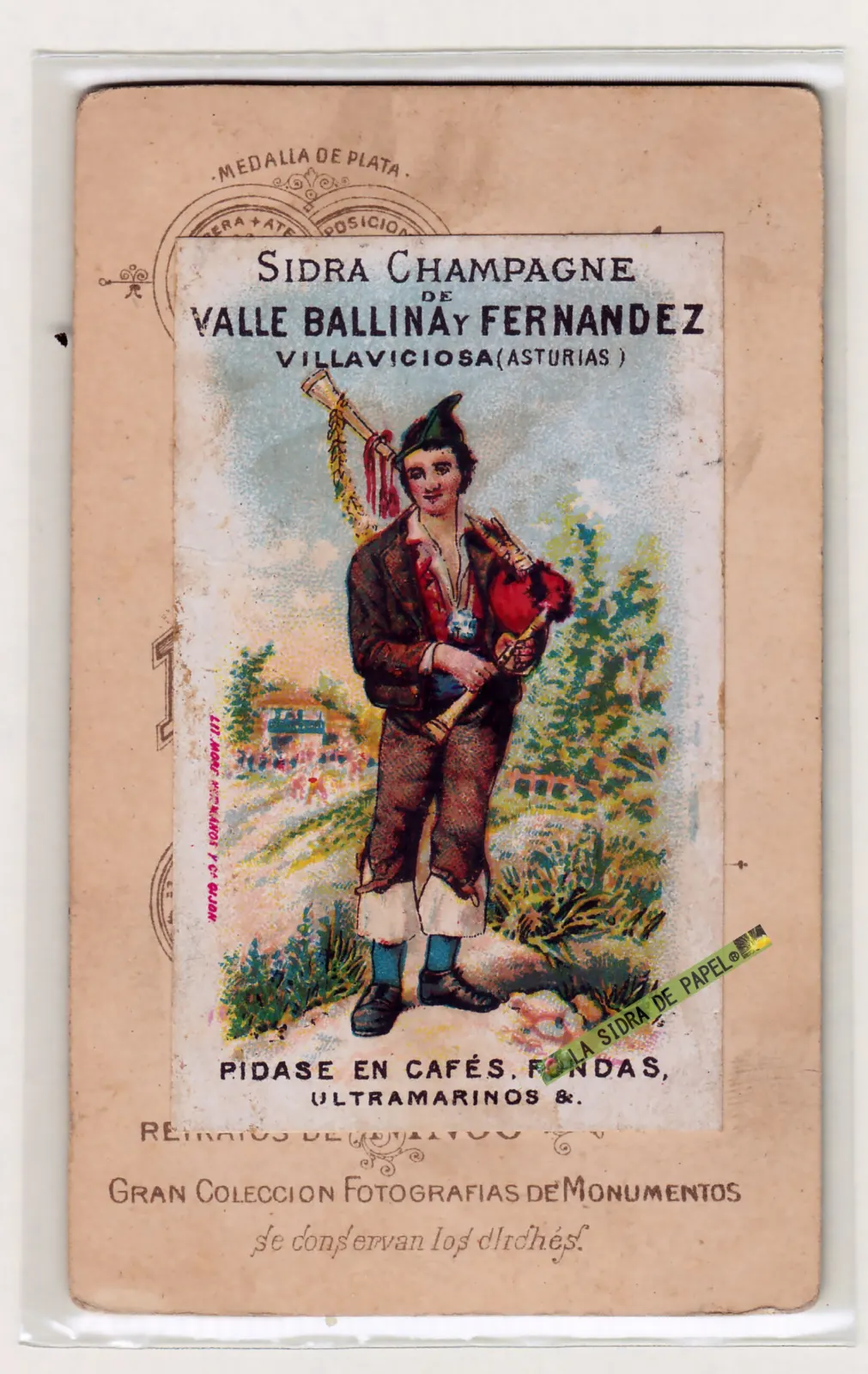
He also has the first advertising card of Valle, Ballina y Fernández —the house behind El Gaitero, in Villaviciosa—, from 1893, with a bagpiper.
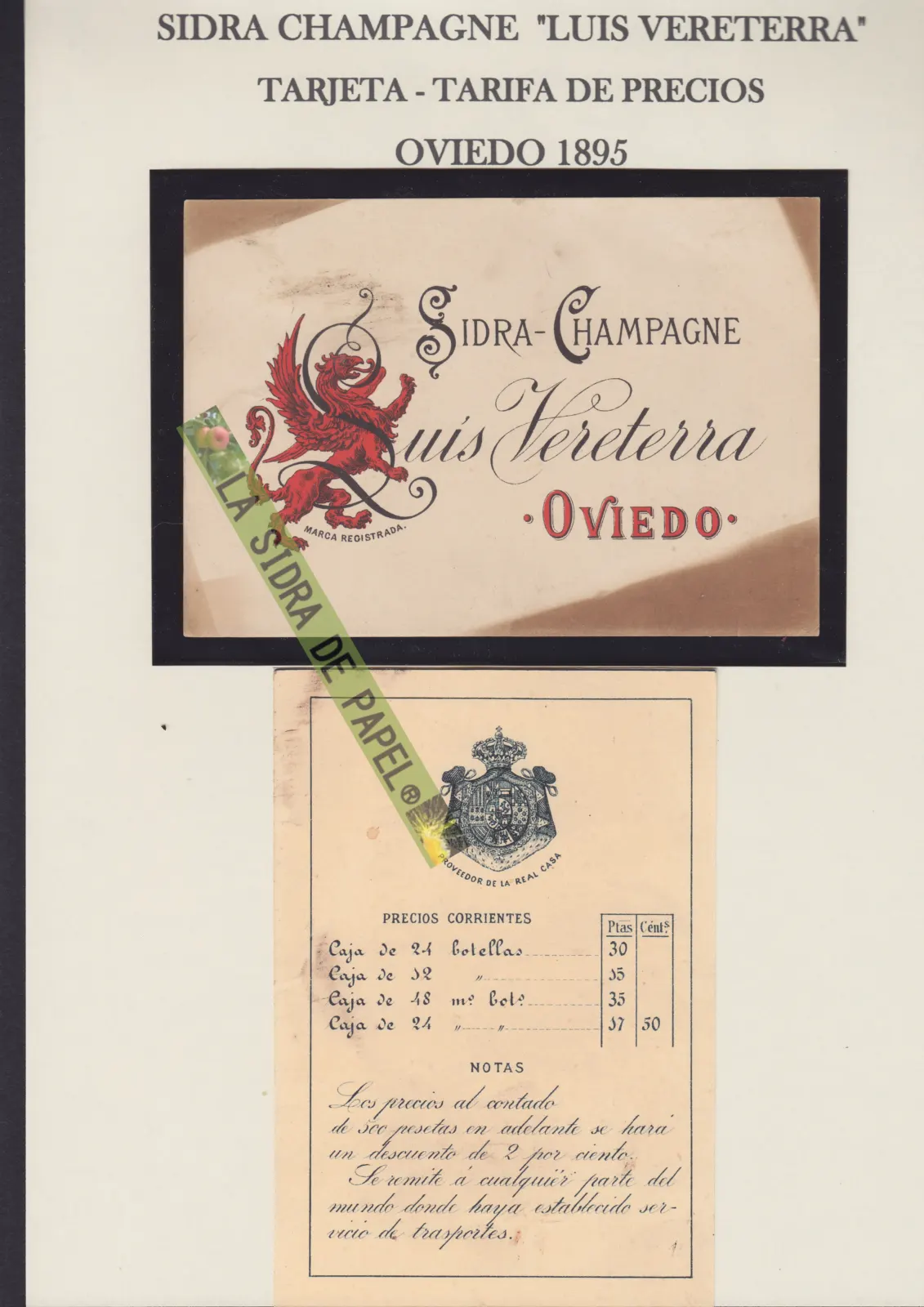
The list ends with a card bearing the price list of Luis Vereterra's champagne cider (Oviedo, 1895), "purveyor to the Royal Household": a case of 24 bottles for 30 pesetas, and shipments "to any part of the world where transport services have been established".
Where to see it
Every now and then the collection leaves home. The first exhibition was in July 2010 in Luarca, on the ground floor of the Casa del Mar, in a room lent by the San Timoteo fishermen's guild, with the help of his wife, Lydia Rico. That is where the name came from: "La Sidra de Papel" occurred to him while designing the poster, and today it is a registered trademark.
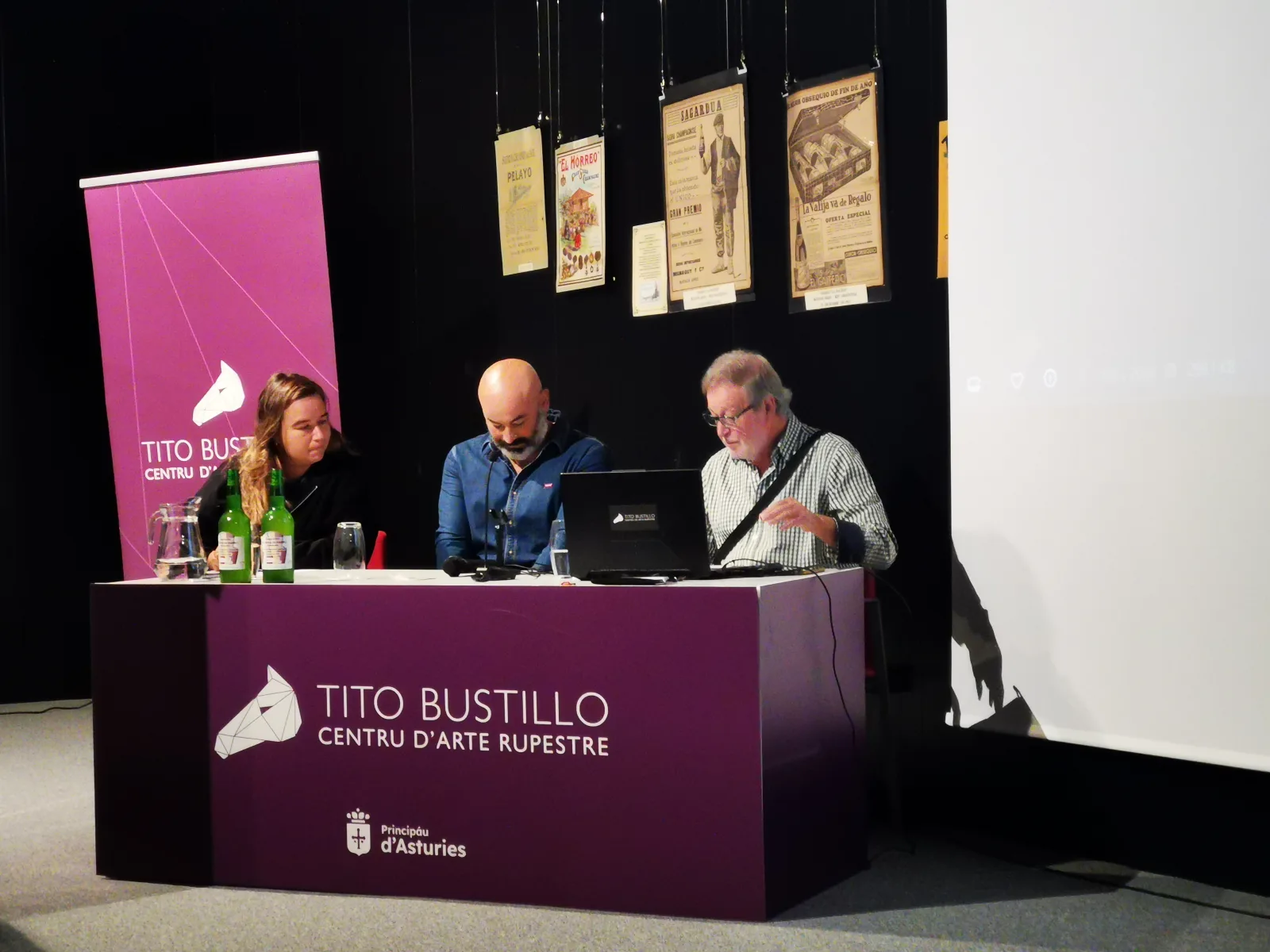
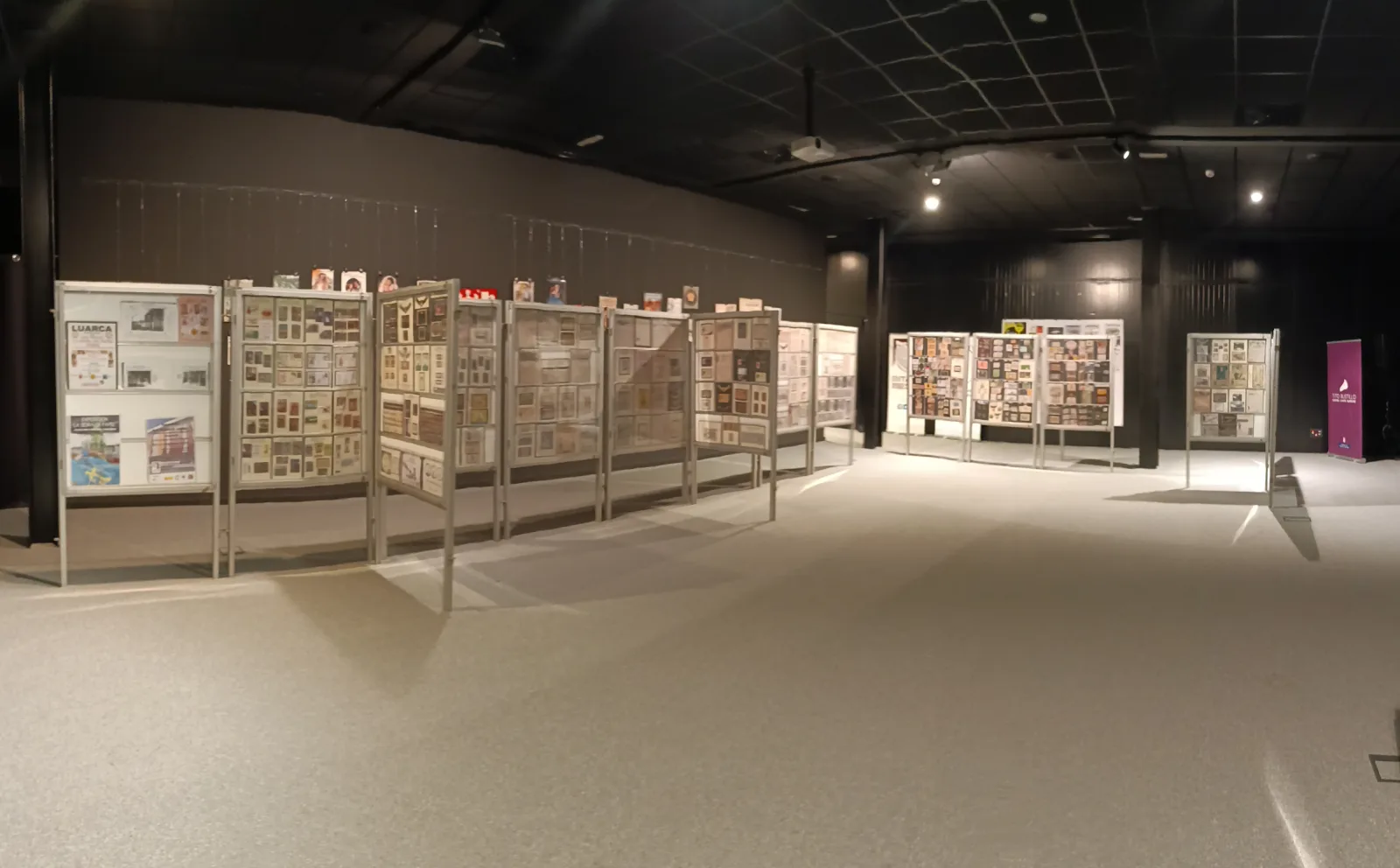
In October 2025 it was shown in Ribadesella, in a very large hall of the Tito Bustillo Rock Art Centre.
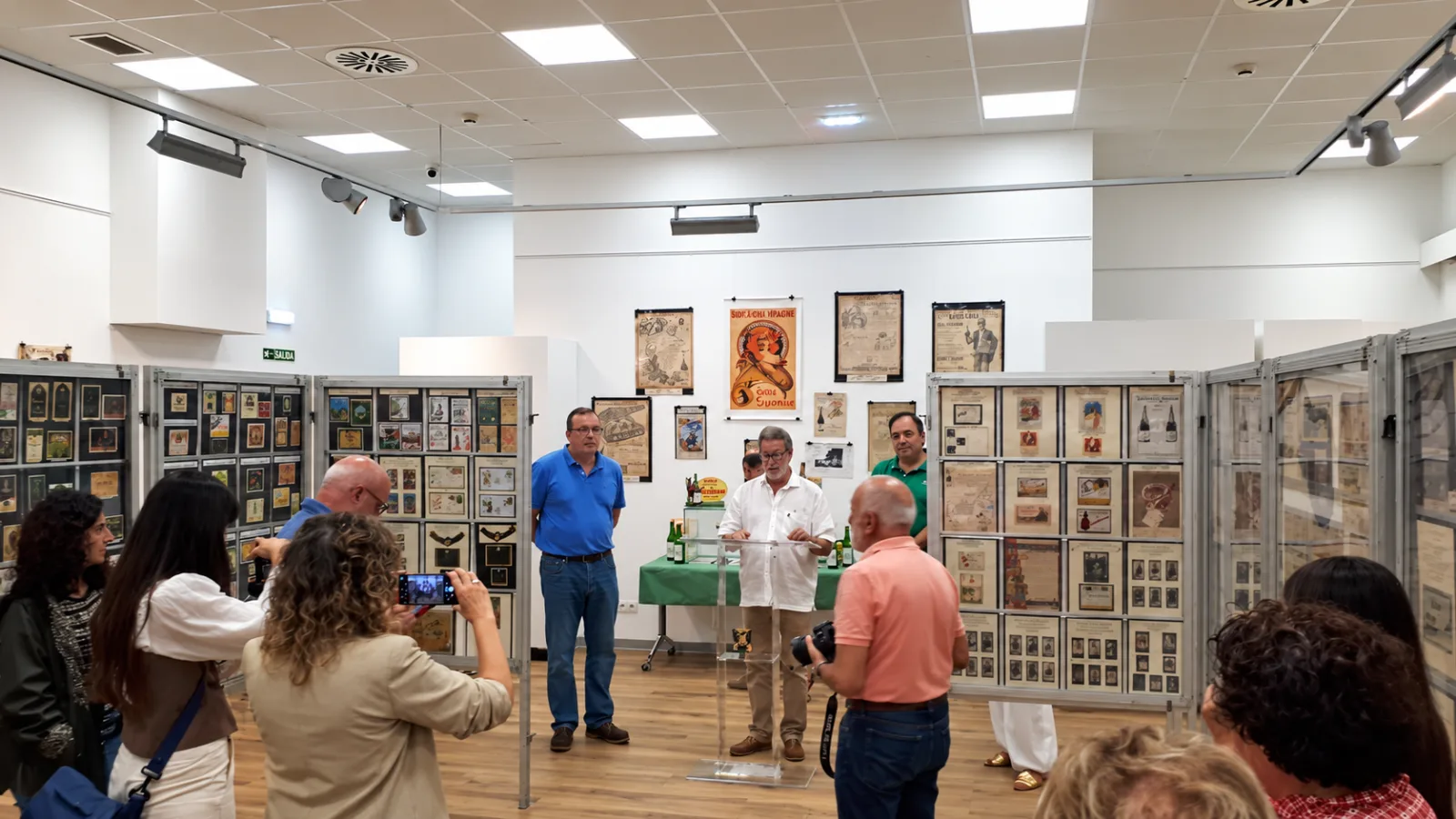
In 2026 it was in Villaviciosa, in the Evaristo Arce Piniella exhibition hall of the Ateneo Obrero de Villaviciosa, from 26 August to 16 September, during the Portal festivities. The room was smaller and fewer display cases fitted, but it went very well: by the time he came to collect it, more than a thousand people had visited. That last exhibition had labels from some 60 countries.
Between exhibitions, the collection can be followed on his Facebook page, "Papeles de Sidra - La sidra de Papel", where he posts photos of the most representative pieces and of labels, with his comments. The magazine LA SIDRA, which put us in touch with him, ran an article on him in October.
What do you think?
Log in to your account to like and comment on the news. You also earn achievements.
Choose your username to comment
Your comments are signed with your username. You only choose it once.